
Summer Golf Developments
Kalamazoo CC, Cattails, Detroit GC Impressions, and West Shore G & CC

It’s been about 3 months - most of the golf season so far - since we’ve scanned the happenings in Michigan golf to see what’s new. Let’s get started with Kalamazoo.
Kalamazoo CC Short Course
If you navigate to the Kalamazoo CC website, you are currently greeted by this video, which from appearance was filmed last fall:
More recently, MLive captured drone footage of the now-completed 11-hole short course, available in their article or on YouTube:
Further articles by Golf Digest and MLive discuss the opening of the course for preview play on June 5th.
From GD:
Andrew Green’s new 11-hole course, fitting dubbed The Eleven, opened earlier this month and is part of a full-scale transformation from Green. His full-scale redesign of the original course, which first opened as nine holes from Tom Bendelow in 1910 then expanded to 18 holes in 1923 with input from Willie Watson, is scheduled to open in 2027.
And from MLive:
On Tuesday, July 14, the Kalamazoo Country Club announced the opening of The Eleven, a new 11-hole short course at 4101 Oakland Drive. It was designed by golf course architect Andrew Green with the goal of making the game more accessible while maintaining strategic complexity. The 1,295-yard course features holes ranging from 50 to 185 yards, with each designed to emphasize precision and creativity over power.
Nothing says “making the game more accessible” than an initiation of over $17k, am I right?
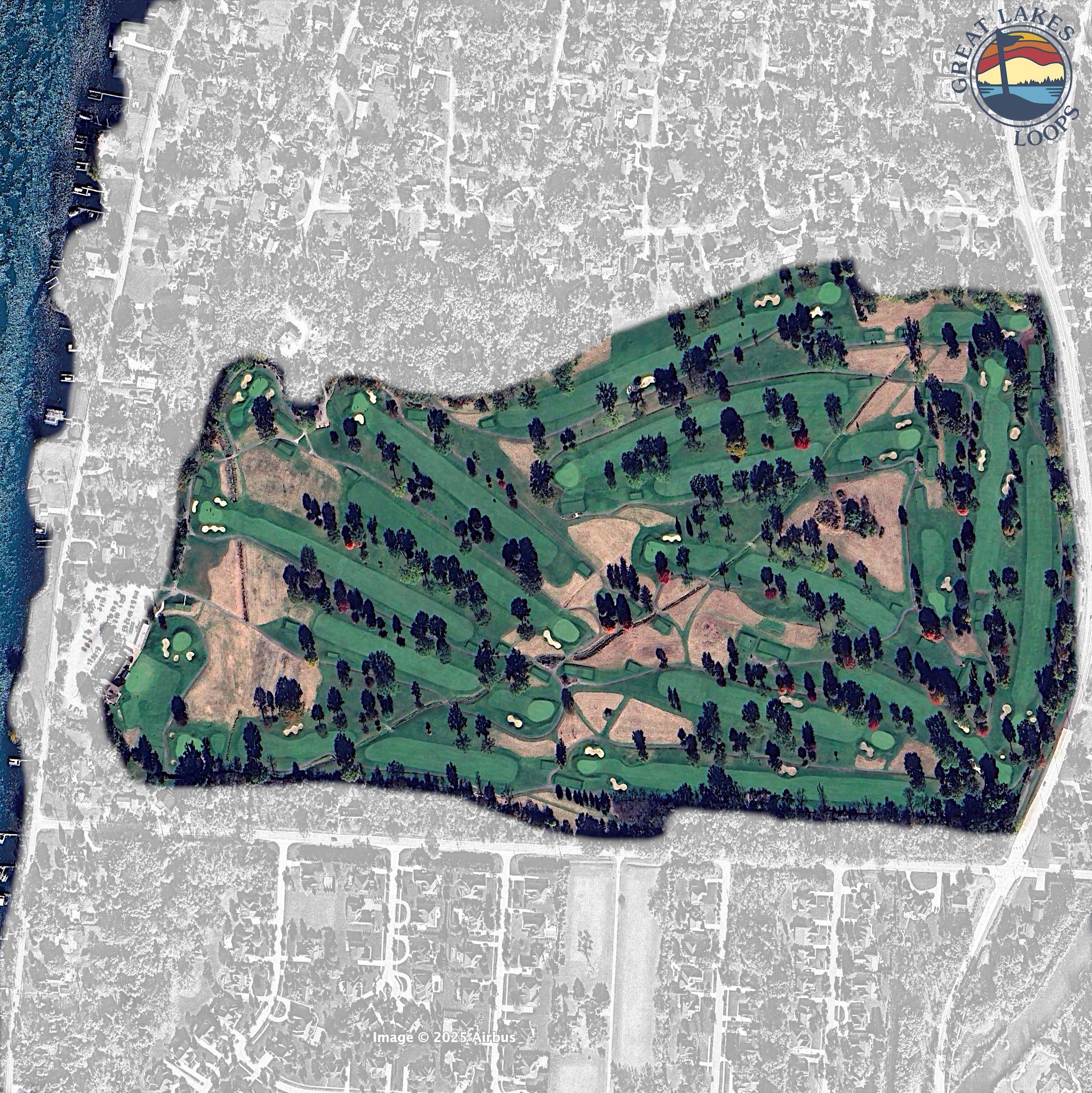
As far as progress on the big course goes, we can make some assumptions based on this spring’s aerial imagery.
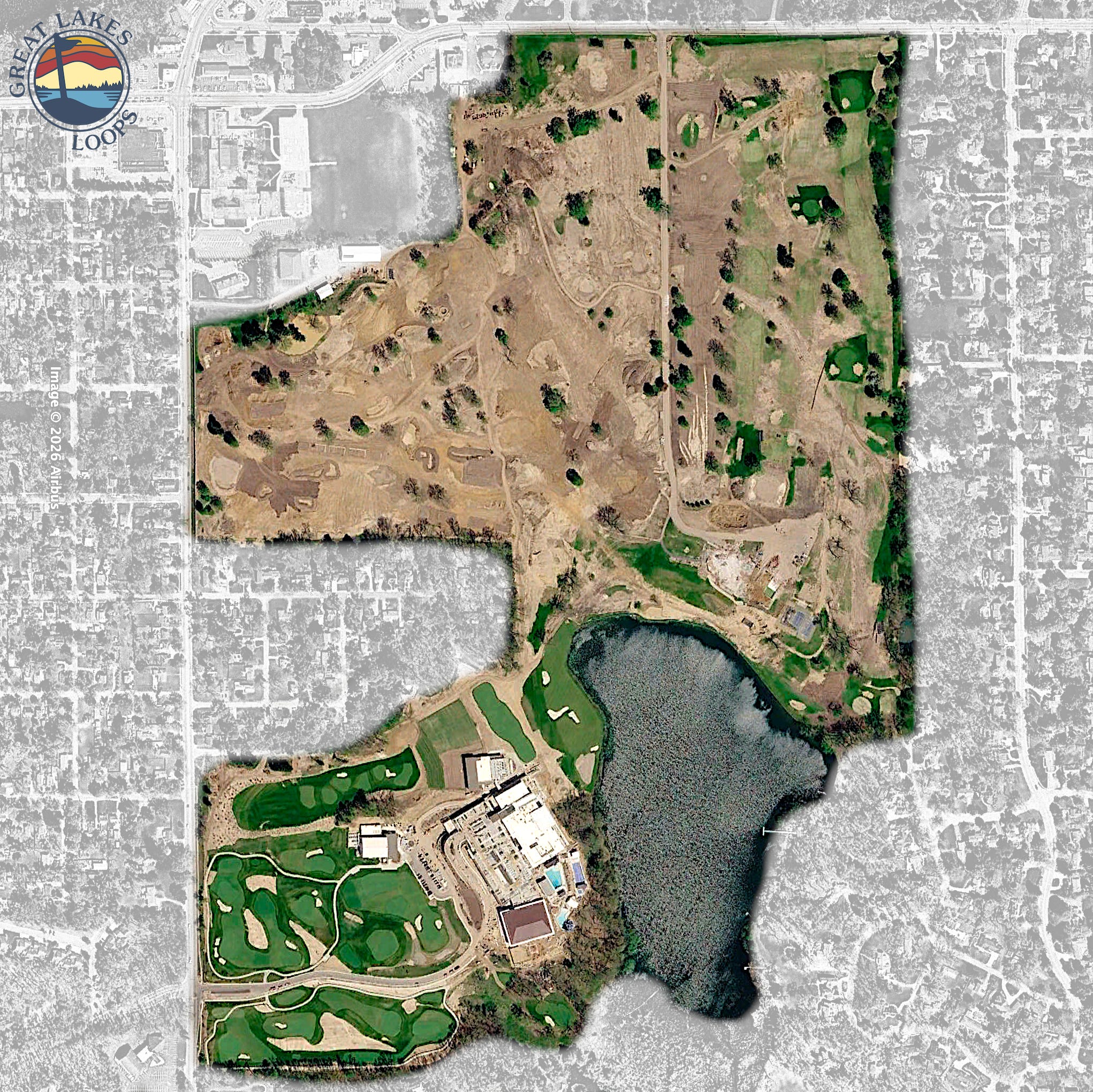
Most of the existing course has been bulldozed, with perhaps some shaping started on the holes more to the west side of the property. And then there is the 18th approach, which appears to be almost fully finished. This presumably was done as a preview or bonus view for members when the new clubhouse opened.
The interesting thing about looking at this project is that, per a Tom Doak comment on Golf Club Atlas, Renaissance Golf Design associate Don Placek (who we love as a supporter of Great Lakes Loops) had been working with the club for the past 10-15 years before being informed that all of his work was being blown up. They definitely seemed to have been making progress on expanding greens and fairways, and it was looking pretty good.
Will Andrew Green build something amazing? Almost certainly. Will it be worth destroying the history and progress on a course that was 110+ years old in favor of something new and extraordinarily expensive, while testing the good faith of the community? I think it will be worth exploring what the next 5, 10, 25 years of the place looks like to answer those questions.
Cattails and Coyote Updates
After years of living on as a zombie golf course, the inevitable finally happened this June - Cattails Golf Club closed to make way for a housing development. I can’t remember when it first came to light that the course was likely to be sold and redeveloped, but it was a minimum of 2-3 seasons ago, possibly 4-5. And yet the course kept opening each year.
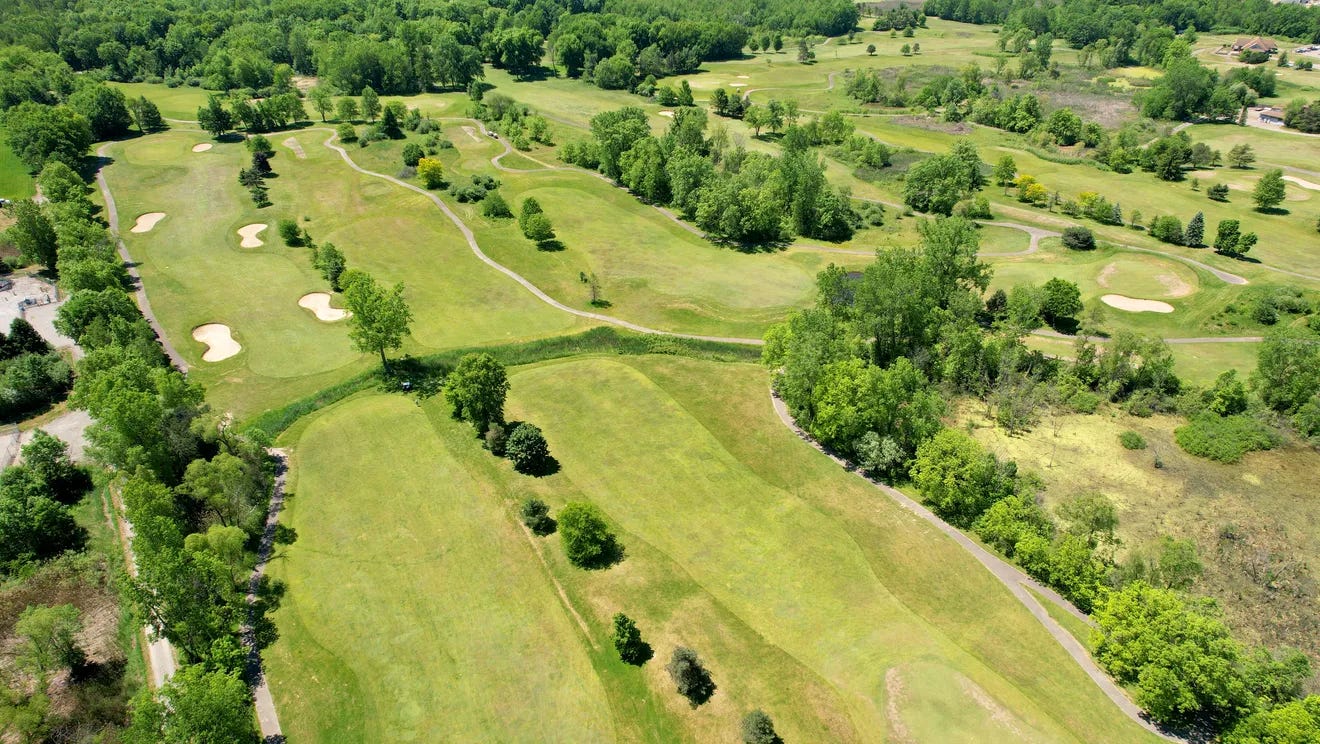
And then on Monday, June 1st, the Lyon Township board voted unanimously to approve a housing development plan for the site, prompting the Cattails owner to close the site within days. “Get in for a round by Sunday, if you wait til Monday, it might be too late,” Cattails owner Tony Moscone said that week. “If you are considering Cattails, the course is staying open week to week, but depending on weather, the closing might be sooner rather than later.”
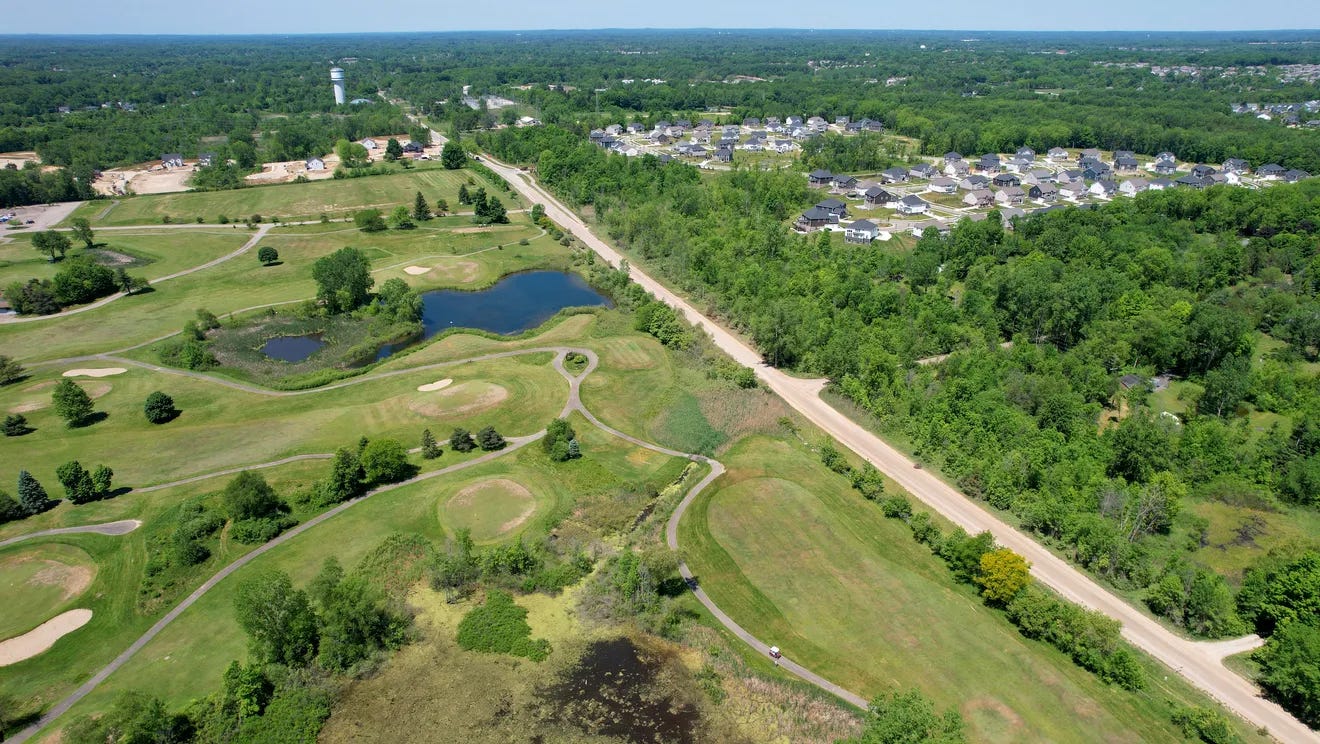
I don’t know when the final day was, but Google now says the course is permanently closed, and the course website is gone. I often said I wanted to play it just to experience it once, but realistically I was never that enthused about making the trip. Now it’s a lost opportunity that I will never get back.
A final note from the plan:
“The plan calls for 67 acres, or about 41% of the site, to be preserved as open space, including 33 acres of wetlands and 22 acres of woodlands. Nearly all of the homes in the development will abut open space. Five miles of continuous pathways will wind through the site, including the existing golf cart pathway, which will be repaved.”
Oh boy - red flag. I’ve written about this before.
I’m sure the idea of wild open space going back to nature will be a great selling point for potential new homeowners. We know what will happen, though. It will be a field full of weeds and invasive species. And that repaved cartpath will be paved exactly once, and then spend the rest of its lifetime in various stages of disrepair. Unless the homeowners agree to an expansive HOA to maintain the path and the parkland, and I’d put money down that any new owners wouldn’t be into that.
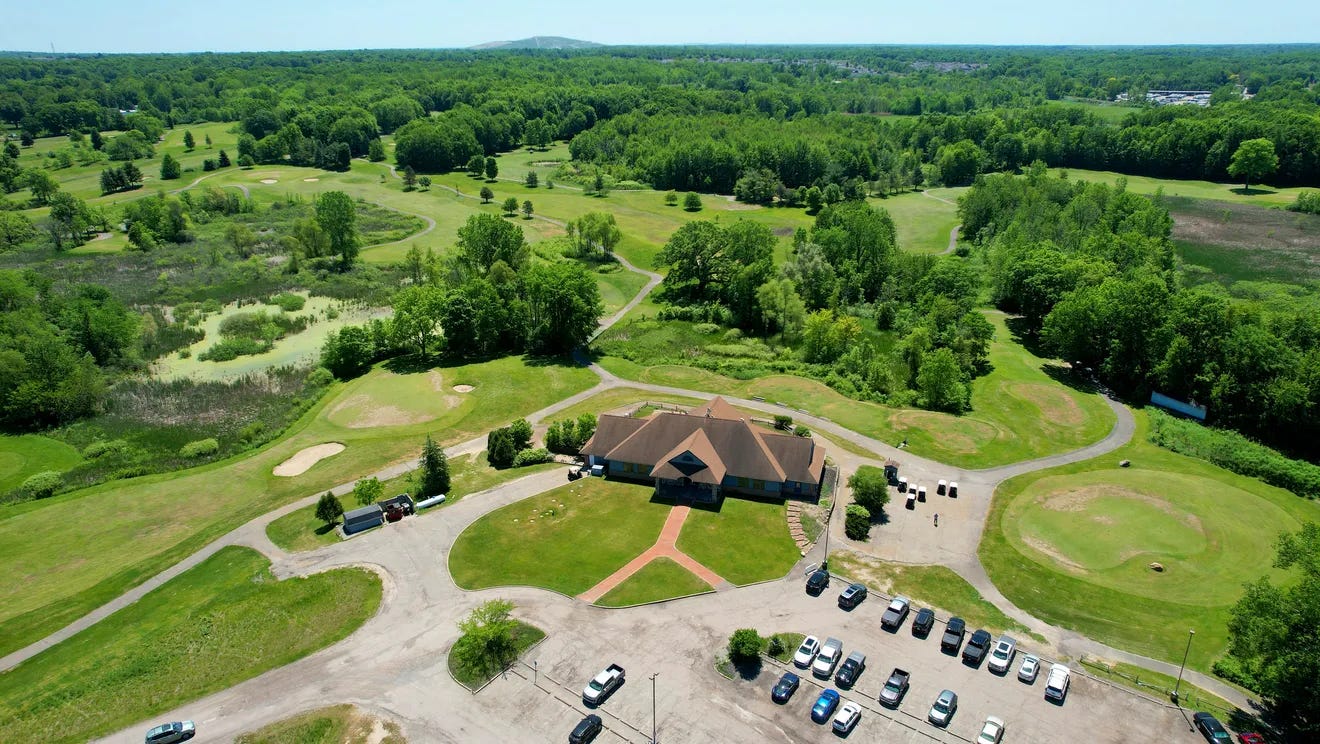
In a similar vein is nearby Coyote Golf Club. Last December the township planning commission recommended approval for a preliminary housing development plan. This is another development that has been on the horizon for at least several years, putting an indefinite limit on the course’s lifeline. The reporting at the time indicated that a final vote would likely come in 2026, possibly as early as February.
For now, the course remains open and the website active. Dick Osburn, owner of Coyote Golf Club since 1994, expects the course to be open for all of the 2026 and 2027 seasons. Construction on homes, he said, would start in the fall of 2027.
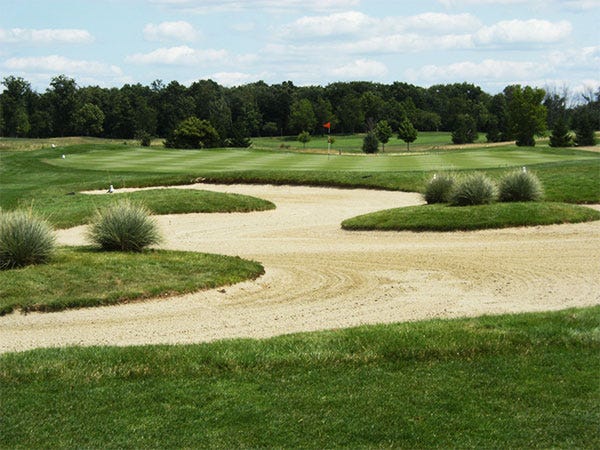
“It’s been good,” said Osburn, who is retiring. “I am just old and nobody wants to buy it as a golf course.”
I mean…. wanting and being able to are two different stories. There is at least one person who would want to buy it and turn it into something cool. But alas.
Post-Rocket Classic Impressions of Detroit GC
For most of us, last week’s Rocket Classic was our first chance to really see Tyler Rae’s renovation of Detroit Golf Club. I was perhaps a little more invested than most people. I even went and checked it out in person on Saturday, although with two young kids who don’t give a rip about professional golf, I will attest that I didn’t see nearly as much of the course as I would have hoped.
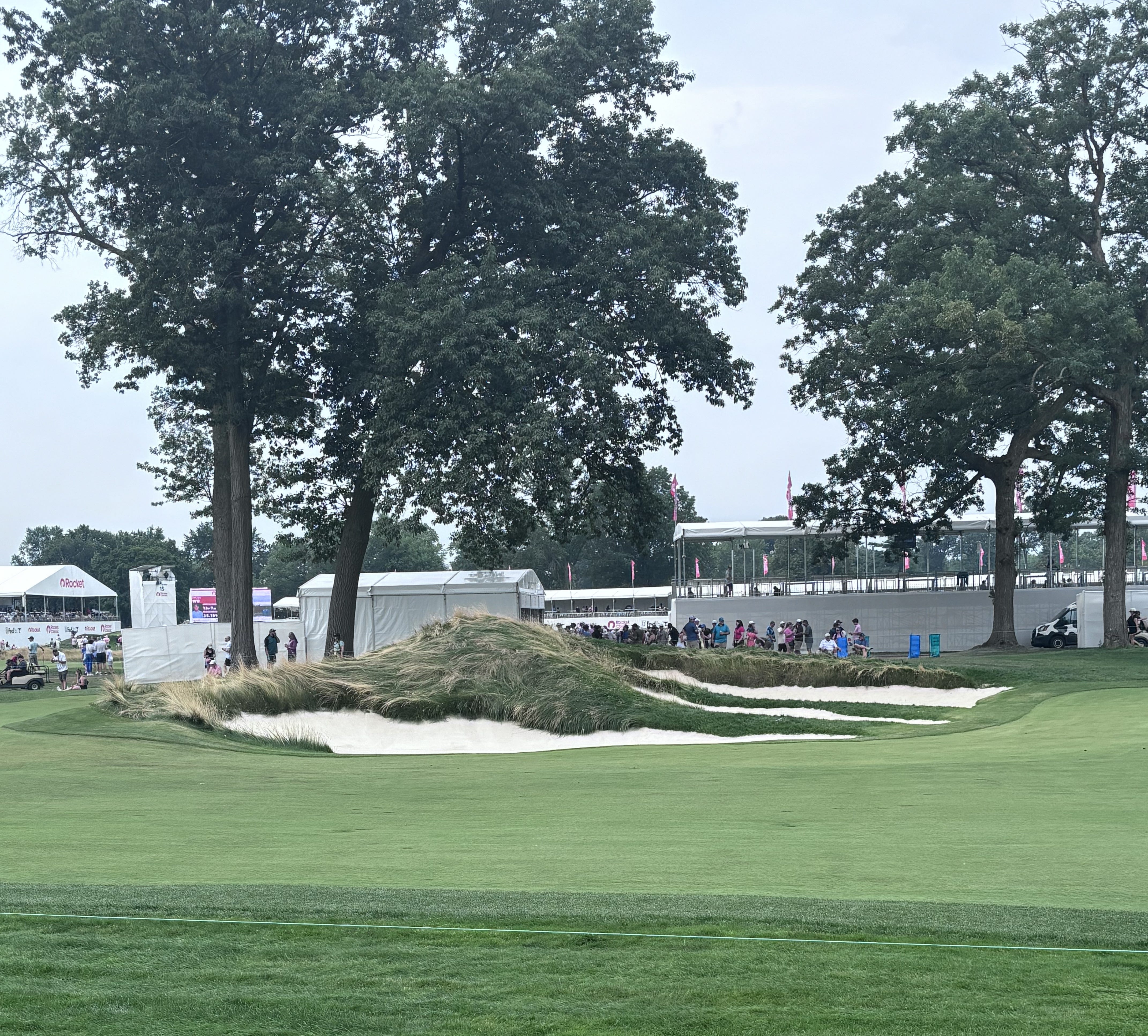
My brief impressions are that the scale of the new bunkers was impressively large, enhanced even more by the fescue “eyebrows” (I understand that the actual grass used may not be fescue - I don’t know what it is - but like in many places, we call all long grass in Michigan fescue). In some places, especially around the 5th hole, it created some visual deception that made it look like there was a ton of land movement on the property, when it’s actually quite flat. Coupled with the very original Donald Ross type of green shapes that allowed pins to be tucked, I just thought it was visually stunning.
But really I’m more interested in how other people came away thinking about the course. Most prominent was perhaps the praise offered by Wyndham Clark:
They made it longer, they made it tougher, and aesthetically with the contrast between the green grass and the fescue… it’s one of the best re-dos I’ve seen, maybe ever. Unfortunately, it’s a bummer we are not coming back net year.
That’s nice, and great PR for the club, but listen. I don’t put a lot of stock into the course design opinions of Wyndham Clark. Or really any Tour pro, for that matter. They are generally most concerned with how predictable and comfortable a Tour stop is for them, not with how interesting and challenging a course is strategically.
Let’s go over to the Fried Egg’s newsletter recap:
The Tyler Rae-led restoration of Detroit Golf Club drew nearly universal praise from Tour pros. The project aimed to restore key elements of Donald Ross’s original design, including revitalized green complexes, improved drainage, enhancing the prominence of the ditches, and additional areas of thick fescue to steepen the penalty for errant shots, including around the bunkers.
Changes were significant throughout the entirety of the golf course, but perhaps nowhere were they more dramatic than at the par-5 14th. The left-side ditch was sharpened, the right fairway bunker was repositioned to cut more into play, the green was rebuilt, and the pond protecting the left side of the green was replaced with bunkers and extensive thick fescue. Over the tournament, No. 14 proved to be a demanding, engaging par 5 for the pros and an appropriate representation of Rae’s restoration goals.
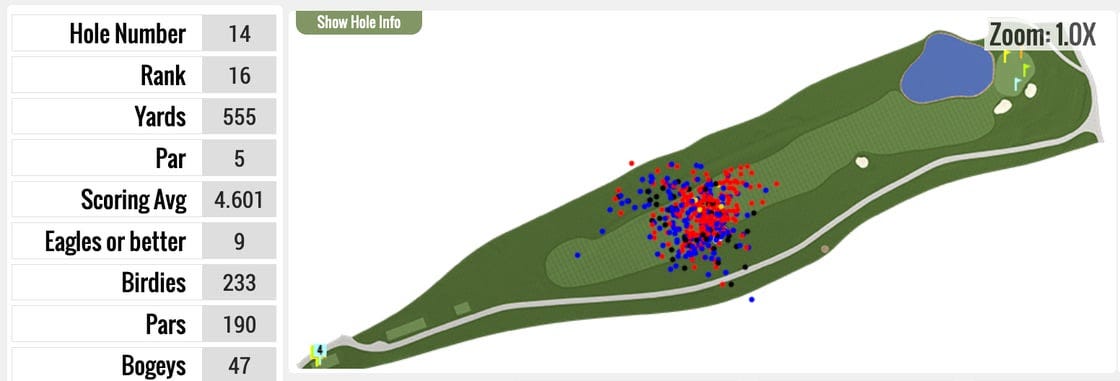
The 14th hole in 2025 (above) and below (2026) after the renovation (ShotLink)
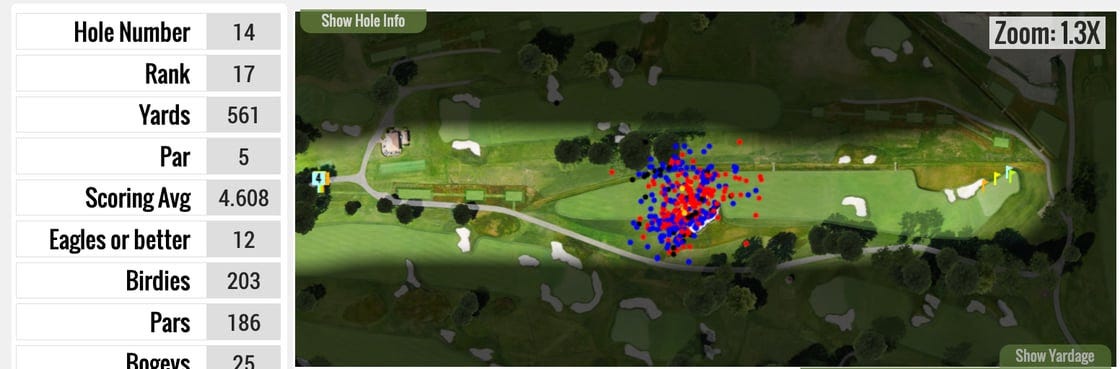
From afar, the changes appeared to be a significant upgrade, at least in the context of testing the best golfers in the world. Unfortunately, the changes will be showcased just once on the PGA Tour.
One of the most interested media members, perhaps, by the amount of coverage was Gary Williams. Here is his sit down with Tyler Rae:
The PGA Tour got into the act of showcasing some of the difficulties that the players had with the new bunkers and long grass:
So yeah, I loved the look of the renovation, and agree with TFE that it got near universal praise. In addition to Tyler Rae, credit needs to go to his associate Jim Ryan (@jimryangcdesign), and to Detroit GC superintendent Sam Moynihan (@turfguysam). To turn the course around like that in one year and still have it looking mint last week is a testament to their hard work.
Going forward, I will want to keep an eye on two things. With the Tour spotlight leaving DGC, I still expect Sam to keep the course looking great. But I read some Golf Club Atlas comments that memberships don’t always like or approve of keeping the long fescue eyebrows around the bunkers due to the difficulty and chance of losing balls. How will the balance of great visuals versus difficulty for the members play out over time?
And lastly, I will be excited to see if the club continues on with a full restoration of the South Course by Tyler as originally planned. Having worked on the course in PGA 2K and based on feedback I’ve heard about the course, I would anticipate that a fully restored South Course would be wildly fun. I would be beyond thrilled to play a round there even before the North.
West Shore G & CC Officially a Donald Ross
From one Ross to, we now know, another.
Up until about two weeks ago, I had in my course directory spreadsheet that West Shore Golf & Country Club on Grosse Ile was a 1908 design by George Ferry. According to West Shore’s club history page, the club believed that to be true, as well. But recent discoveries uncovered by West Shore staff research have clarified that Ferry actually designed Westshore GC in Douglas, which closed in 2011.
Classic mix up!
In even better news, through the discoveries, the Grosse Ile club can now officially make the coveted claim that it is a Donald Ross design. Reading through the club history page will give you the full story, but if you want the TL;DR version, here it goes.
A group of Detroit and Downriver businessmen formed the Island Golf Association in 1919, with an ambitious plan that included “two 18-hole courses, residential development, a boathouse, and docks to support a projected 1,200 members. Renowned golf course architects Donald Ross and Walter Hatch were selected to design the courses.”
That plan fell through, with a slightly less grand plan for the Island Country Club emerging in 1920. Ernie Way was the greenskeeper at Detroit Golf Club at the time, and brother of Bert Way, a prominent figure behind the establishment of many Detroit-area clubs, including the CC of Detroit. Ernie was brought in to build a temporary 9-hole course while Donald Ross prepared a separate 18-hole layout.
Over the next several years, Ross would finish his first 9 holes, allowing for a composite 18-hole routing when combined with Way’s holes. Once Ross’ 18 was finished, early plans to maintain a 27-hole property were abandoned in 1925, with the land from the Way 9 being sold for housing development.
The Depression did a number on the club, and led to a number of reorganizations, re-namings, property sales, and lost clubhouses. After becoming West Shore Golf Club in 1933, and then West Shore G & CC in 1944, the club seemed to gain some stability around the 70s and 80s:
From the mid-1970s through the mid-1980s, additional land acquisitions strengthened the course layout. A major renovation in 1986 shaped much of the clubhouse as it stands today.
The club continued to evolve with key improvements:
The current halfway house opened in 1984 alongside a course reconfiguration
Tee and green renovations in 1987–1988 adjusted the course to a par of 71
Drainage improvements were completed in 1991
A new irrigation system was installed in 2001
Cart path upgrades were completed in 1998
Additional bunkers and course enhancements were added in 1995, 2002, and 2004
Many of these updates were guided by Matthews and Associates, often in response to the loss of more than 300 trees due to the Emerald Ash Borer.
Another dip put the club in dire straits throughout much of the 2000s, until the rising tide of the Covid boom revitalized membership, increasing from 140 members to 400 today.
With an improved membership situation and a more clear picture of the club’s history, I would love to see a focused long-term master plan to either help bring out any noticeable Ross features that are still left, or re-introduce some Ross-inspired additions to the layout.
I used to work at Kalamazoo CC back in the 90s and played it every Monday I was allowed. What appears to be the new 18th hole used to be the 11th hole, a tight and short par 4 that was drivable but risky. The old course was fun, definitely had some challenges based on the amount of land they were confined into using. They had a 9 hole executive course mostly par 3s with a couple of 4s, it wasn’t played that much, but that was a different time and those courses were looked down upon 30 years ago, it wasn’t cool to play a par 3/executive course.
Overall, it’s sad the old course will be completely unrecognizable, because there were some fun shots that never got old.